The ABC model in ABA is a way of analyzing behavior that breaks any situation into three parts: what happened before (the antecedent), what the child did (the behavior) and what happened after (the consequence). It helps you understand why a child needs a certain behavior and change it without shouting or punishment.
What the ABC model in ABA is
The ABC model is a basic tool of applied behavior analysis (ABA) that describes the link between an event before a behavior, the behavior itself and its result. In the scientific literature this is called the three-term contingency.
The core idea is that behavior does not come "out of nowhere". It always happens in a certain context and persists if something maintains it. The approach builds on B. F. Skinner's work on operant learning and today is a standard in ABA therapy.
Antecedent: what happens before the behavior
An antecedent is an event, situation or stimulus that comes before a behavior and affects how likely it is to occur. It can be a request from an adult, a change in routine, noise, hunger, lack of attention or a "no".
It is important to tell the immediate antecedent (what happened seconds before the behavior) apart from background factors: lack of sleep, illness, a stressful day. Background factors do not "trigger" behavior on their own, but they lower the child's tolerance for difficult situations.
Behavior: what exactly we observe
Behavior in ABA is any observable and measurable action. It should be described so that two adults who saw the situation would write it down the same way.
Wording like "gets angry" or "behaves badly" does not work, because these are interpretations. Wording like "screams for more than 10 seconds", "hits the table with a hand" or "leaves the table during a task" does work.
Consequence: what happens after the behavior
A consequence is an event that happens right after the behavior. It is the consequence that most often determines whether the behavior will be repeated in the future.
A consequence is not a punishment. If a child gets a candy after screaming, the screaming will probably be repeated, even if the adult did not intend that. It is through these "unnoticed" consequences that unwanted behavior becomes established.
Examples of ABC analysis: a table
| Antecedent | Behavior | Consequence | Likely function |
|---|---|---|---|
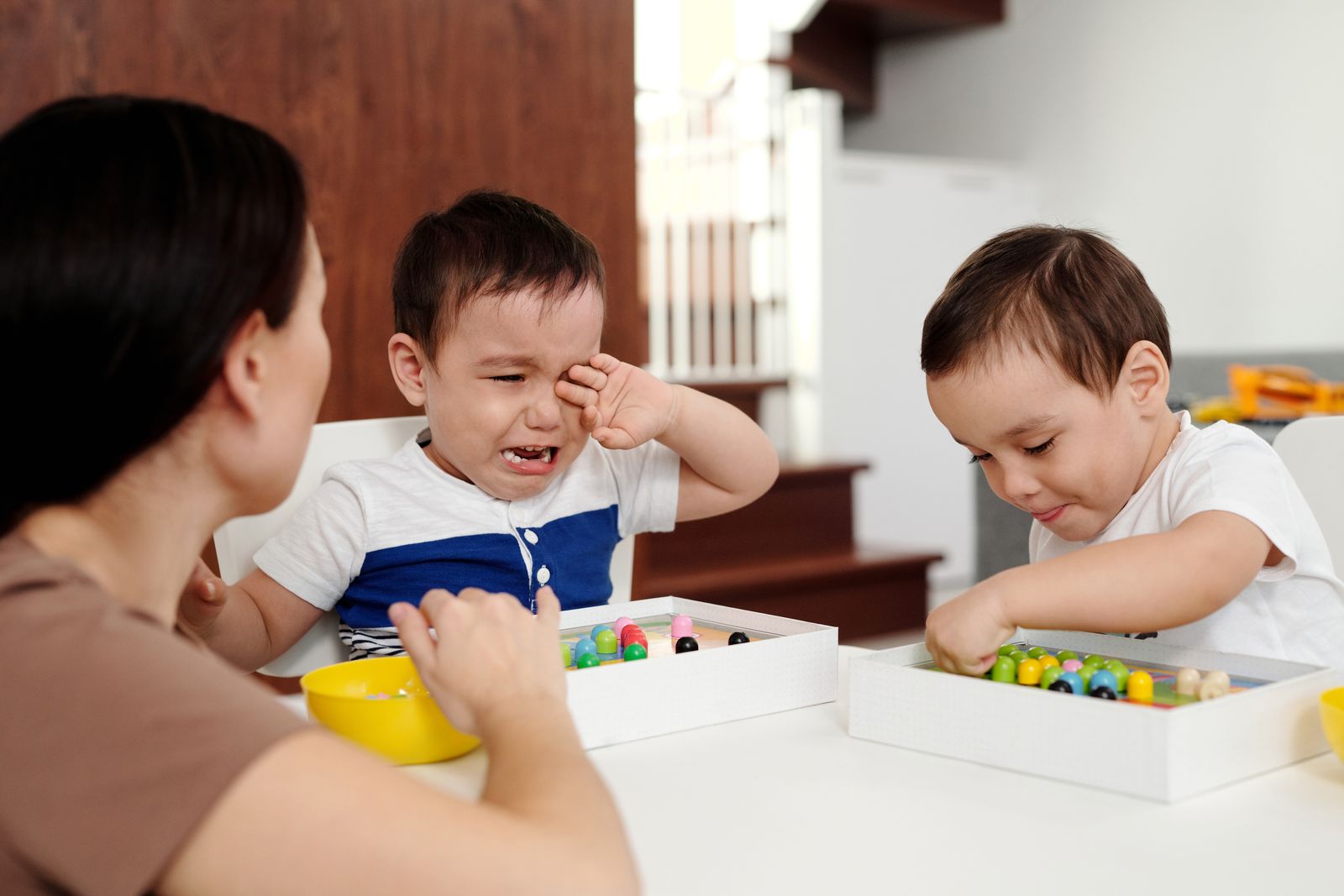
| Mom asks the child to tidy up the toys | The child lies down on the floor and cries | Mom tidies up herself | Escape from a demand |
| Mom is talking on the phone | The child throws a spoon | Mom gets distracted and turns to the child | Getting attention |
| A favorite toy car is on a high shelf | The child screams and reaches for the shelf | An adult gives the car | Access to an item |
| A long time with nothing to do | Waves hands, spins around | The behavior continues on its own | Sensory stimulation |
The four functions of behavior
The function of a behavior is the reason it persists. ABA identifies four main functions:
- Attention - the child gets a reaction from adults or peers.
- Escape or avoidance - the child gets out of an unwanted task or situation.
- Access to an item or activity - the child gets what they want.
- Automatic (sensory) reinforcement - the behavior feels good in itself.
The same behavior, such as screaming, can serve different functions in different situations. That is why there are no "universal recipes" without analyzing the context.
How to keep an ABC record: basic steps
A simple ABC record gives meaningful information after just two or three weeks of observation. Follow this sequence:
- Describe the behavior specifically, without judgment.
- Write down what happened right before it.
- Write down what happened right after.
- Add the date, time and place.
- Collect 10–15 records and look for recurring patterns.
It is best to write things down right away or within a few minutes, while the details are fresh. If the behavior happens often, recording 2–3 typical episodes a day is enough.
Common mistakes when using the ABC model
Even attentive parents make the same kinds of mistakes that make the analysis wrong:
- describing emotions instead of actions ("got offended", "was naughty");
- recording an antecedent from an hour earlier rather than right before the behavior;
- ignoring "invisible" consequences: a look, a sigh, giving in;
- drawing conclusions after 2–3 episodes;
- applying the function from one situation to all the others.
Research on functional behavior analysis, in particular the work of Brian Iwata and colleagues (1982, 1994), showed that the same form of behavior can be maintained by completely different causes. That is why "guessing" the function without data often has the opposite effect.
A comment from an ABA practitioner: the most common mistake parents make is looking for someone "to blame" instead of a pattern. An ABC record judges neither the child nor the adult; it only shows how the "event - reaction - result" system works.
When you need a specialist
Your own observations are useful, but they have limits. Contact a certified ABA therapist if:
- the behavior is dangerous for the child or others (aggression, self-injury);
- the problem happens every day and has not decreased for several weeks;
- you cannot identify the function of the behavior;
- adult demands lead to even stronger outbursts.
A professional analysis includes structured observation and, if needed, a functional assessment on which an individual plan is based.
What's next: from understanding to a system
This article explains the principles, but it does not replace full training. To use ABC analysis in everyday life, you need a sequence of actions, record templates, practical tasks and real case studies. A one-to-one consultation with Alina is included only in the Platinum plan.
That is exactly what you get in the online ABA therapy course, which takes you from basic concepts to confident practical use. If you are still deciding where to start, first read about ABA therapy in general.
Frequently asked questions
What does ABC mean in ABA therapy?
ABC stands for Antecedent, Behavior and Consequence. It is the basic scheme for analyzing what causes a behavior and what maintains it.
Can a mom keep an ABC analysis on her own?
Yes, parents can keep simple ABC records for observation. But conclusions about the function of the behavior and the intervention plan should be made by an ABA specialist.
How is an antecedent different from a trigger?
An antecedent is any event before a behavior, and a trigger is the antecedent that provokes it most often. Not every antecedent is a trigger.
Is a consequence in ABA a punishment?
No, a consequence is any event after a behavior. It can strengthen the behavior, weaken it or have no effect on it.
How many records are needed for an ABC analysis?
Usually 10–15 records in different situations. The more data, the more accurately the function of the behavior can be identified.
When should you contact an ABA therapist?
If the behavior is dangerous, happens every day or your actions have not worked for several weeks. It is also worth reaching out when you cannot identify the cause.