ABA therapy develops speech by teaching a child to use communication as a tool. The specialist creates motivation, breaks a skill into small steps and reinforces every successful attempt. In the behavioral approach, speech is not only pronouncing words but being able to ask, name, answer and keep up a conversation.
This is especially important for children with speech delay and autism spectrum disorder (ASD), when a child speaks little or not at all. Below are the principles, safe examples, common mistakes and signs that you need a specialist.
What ABA is and how it relates to speech
ABA (applied behavior analysis) is a scientific discipline that studies how the environment affects human behavior and uses these patterns to teach useful skills. ABA therapy is the practical application of these principles when working with a particular child.
In ABA, speech is seen as behavior. If a word helps a child get what they want, they speak more often. So the work starts not with "repeat after me" but with the question: why would the child talk?
Key terms: verbal behavior and functional communication
- Verbal behavior is any communication that works through another person: words, gestures, cards, signs or devices.
- Functional communication is a child's ability to clearly express a need instead of screaming, crying or aggression.
- Mand is a request: the child asks for what they want right now.
- Reinforcement is a consequence after which a behavior becomes more likely in the future.
- Augmentative and alternative communication (AAC) means gestures, PECS cards, tablets and other tools that support the child until speech appears or becomes sufficient.
- Echolalia is repeating heard words or phrases, which can be a stage of speech development.
Basic principles: how ABA builds speech
The approach relies on a few rules that work both for children with speech delay and for children with ASD:
- Motivation comes first. A child communicates more willingly where there is something they want: a toy, food, an activity.
- Small steps. A complex skill is broken into simple ones: sound, syllable, word, phrase.
- Immediate reinforcement. The child gets what they want right after the attempt; otherwise the "said it - got it" link will not stick.
- Prompts and fading them gradually. At first there is more help, then it is removed so the skill becomes independent.
- Teaching in the natural environment. Words stick better during play, on a walk and at the table than only in "lessons".
- Generalization. The skill should work with different people, in different places and with different objects.
Types of verbal skills according to Skinner
American psychologist B. F. Skinner, in his book "Verbal Behavior" (1957), divided speech by function. This is the basis of modern communication development programs.
| Skill type | What it is | Example |
|---|---|---|
| Mand (request) | The child asks for something they want | "Juice, please" |
| Tact (naming) | The child comments on or names what they see | "Car!" |
| Intraverbal (conversation) | Answering another person's words | "What's your name?" - "Sasha" |
| Echoic (repeating) | Repeating exactly what was heard | Mom: "Ball" - child: "Ball" |
Work usually starts with mands, because a request is directly linked to the child's motivation.
What research and experts say
The effectiveness of behavioral methods has been studied since the 1960s. In Ivar Lovaas's classic study (1987, Journal of Consulting and Clinical Psychology), about half of the children who went through an intensive program made significant developmental gains, including in communication. The methodology of this work was later criticized, and modern practice has become gentler and more play-based.
Today specialists emphasize individually chosen goals and respect for the child. A comment from a practicing ABA specialist: "The biggest mistake parents make is waiting for the child to 'start talking on their own' while demanding words for no reason. When a word becomes useful, progress comes faster."
A safe example at home: how to teach a child to ask
This exercise suits most children and needs no special materials. It takes 5–10 minutes, without pressure.
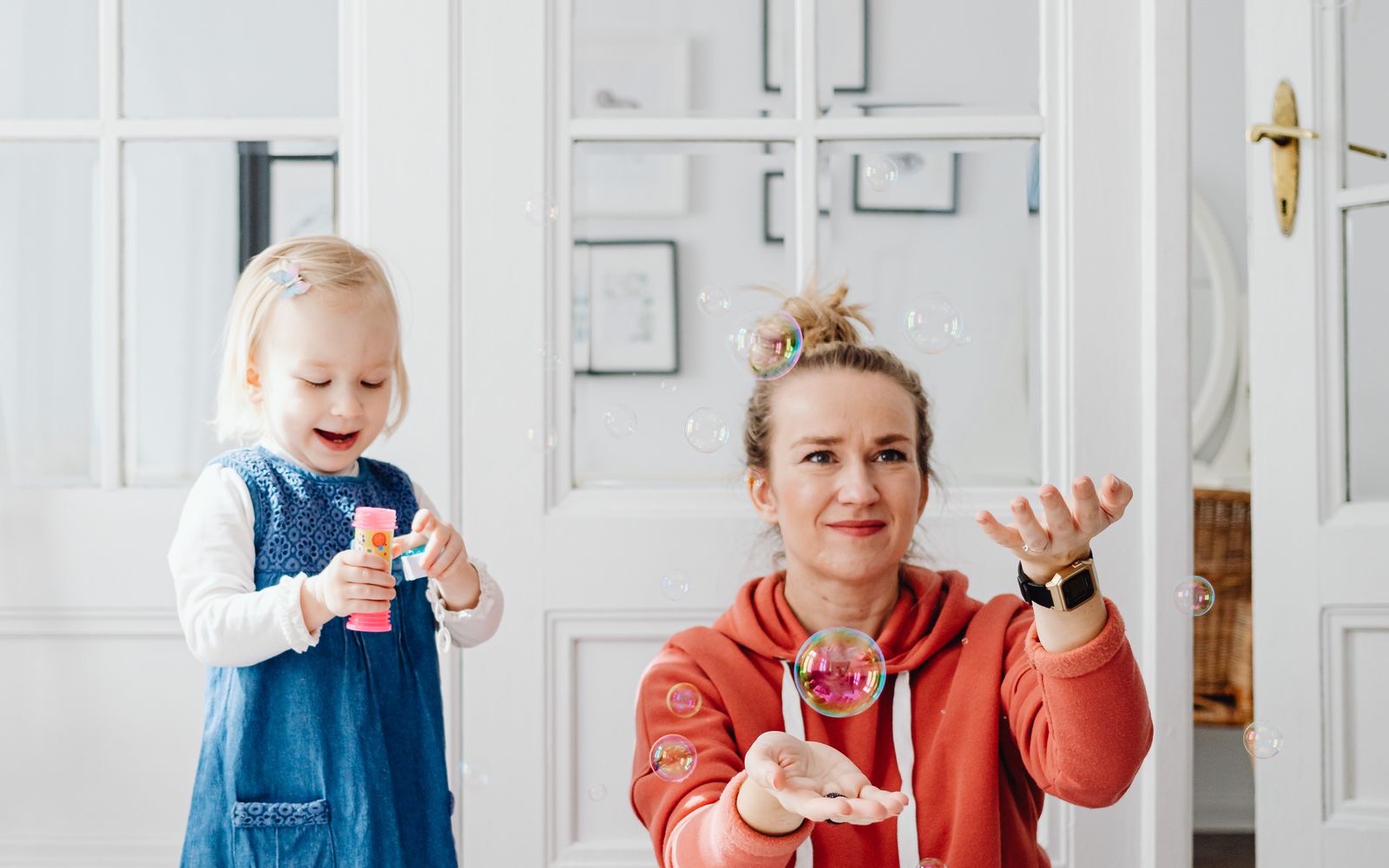
- Choose a motivator. Pick a favorite item: juice, a ball, bubbles.
- Create a situation of need. Put the item where the child can see it but cannot reach it.
- Give a prompt and reinforce right away. Wait 3–5 seconds. If there is no response, prompt a gesture, a sound or the start of the word ("ju…"). As soon as the child tries, give them the item.
- Gradually fade the prompt. Over time, expect more: first a sound, then a word, then "juice, please".
Accept any attempt - a gesture, a look, a syllable. The main thing is that communication works.
Common parent mistakes
- Demanding that the child repeat words without motivation. The child repeats but does not understand why.
- Giving everything "by guessing". If needs are met without communication, there is no point in talking.
- Punishing a "wrong" word. This reduces the desire to try.
- Being afraid of cards and gestures. Alternative communication usually does not slow down speech; it reduces frustration.
- Overloading. Long, forced sessions lead to resistance.
- Acting without a system. Random prompts and different demands from different adults confuse the child.
ABA or a speech therapist: what's the difference
ABA builds motivation, the communicative function and interaction skills. A speech therapist works on articulation, sound production and building the language system.
These approaches do not compete; they complement each other. The best results usually come from teamwork between a speech therapist, an ABA specialist and the parents.
When you need a specialist
Contact specialists without waiting to see "if it passes" if:
- by 12 months the child does not point, wave or respond to their name;
- by 16 months there are no words at all;
- by 24 months there are no two-word phrases;
- the child has lost words or skills they already had;
- aggression or self-injury appears because the child cannot explain what they want.
In such cases it is worth seeing a pediatrician, a neuropsychologist and an ABA therapist, who will assess the child's skills and create an individual program.
What's next: from tips to a complete system
This article gives guidance and safe steps, but speech development is a step-by-step process. You need to know what to teach in what order, how to choose prompts, measure progress and act in unusual situations.
If you want to approach this systematically, the ABA therapy course breaks the sequence of actions into stages and includes practical tasks, templates and case studies. A one-to-one consultation with Alina is included only in the Platinum plan.
Frequently asked questions
Can ABA teach a non-speaking child to talk?
ABA can significantly develop communication and, in many cases, speech, but the result is individual and depends on age, starting skills and how regular the sessions are. If words do not appear, the specialist chooses alternative ways to communicate.
At what age can you start ABA for speech development?
You can start as soon as you suspect a speech or communication delay, often from 1.5–2 years old. The earlier support begins, the easier it is to build skills.
How is ABA different from sessions with a speech therapist?
ABA builds the motivation to talk and communication skills in general, while a speech therapist works on sound production and the language system. The best result comes from combining both approaches.
Do PECS cards and gestures get in the way of speech?
Usually not: alternative communication reduces frustration and often supports the appearance of words. It is important that the specialist plans a gradual transition to speech.
How long does it take to see the first results?
First changes, such as attempts to ask, are often noticeable after a few weeks of systematic work, while stable skills take months to form. The pace is always individual.
Can parents use ABA principles at home on their own?
Yes, parents can use basic things at home, such as creating motivation and reinforcing attempts. Complex cases are best handled together with an ABA therapist.