Starting kindergarten or school is always an exciting stage. But for families raising a child on the autism spectrum (ASD), this period can be a real challenge. New people, unclear rules, loud noises and a sudden change in routine can cause a child intense stress.
Parents often feel lost: where do we start? How do we help our child not just be present in a group but actually socialize, connect with peers and not feel constantly anxious? In this article we look at the core of the problem, the basic principles of preparation and the common mistakes to avoid.
What is the main challenge of socialization with autism?
For a neurotypical child, socialization often happens intuitively: they watch others, copy their behavior, easily read facial expressions and gestures, and quickly pick up the unwritten rules of play.
For a child with autism, this natural mechanism works differently. The difficulties come from three key factors:
- Social communication differences. The child may find it hard to start contact, ask for help, understand another child’s emotions or keep a conversation going.
- Sensory overload. The school bell, noise in the corridor, bright lights or even the texture of a new uniform can cause physical pain and lead to a meltdown.
- A need for routine and predictability. Kindergarten and school are environments where things change all the time. For a child with ASD, any surprise means losing their sense of safety.
Basic principles of preparation: what parents can do
To minimize stress, preparation should start long before the first day of school or kindergarten. The foundation of successful adaptation is a gradual approach and methods with proven effectiveness, in particular ABA therapy (applied behavior analysis).
ABA therapy helps break a complex skill (for example, “being in a classroom”) into many small steps the child can understand, and reinforce them through positive reinforcement.
Key principles of adaptation:
- Make everything visual. Children with autism are often visual learners. A teacher’s words can get lost in background noise, but a picture schedule of the day stays clear and constant.
- From simple to complex. Never leave your child for a full day straight away. Start with the shortest possible time in the new environment.
- Generalizing skills. If your child can sit at a table and do tasks at home or in the therapist’s office, it doesn’t mean they can do the same in a noisy classroom. Skills need to be gradually transferred to new settings.
A few safe examples to start with
What can you do right now to prepare your child for change without harming them? Here are some basic steps:
- Getting to know the route and the grounds. Start walking near the school or kindergarten on weekends when no other children are around. Let your child get used to the building, the playground and the route.
- Social stories. Make a simple booklet with photos: “This is my kindergarten. This is my teacher Maria. When I arrive, I hang my jacket here.” Read the story every day.
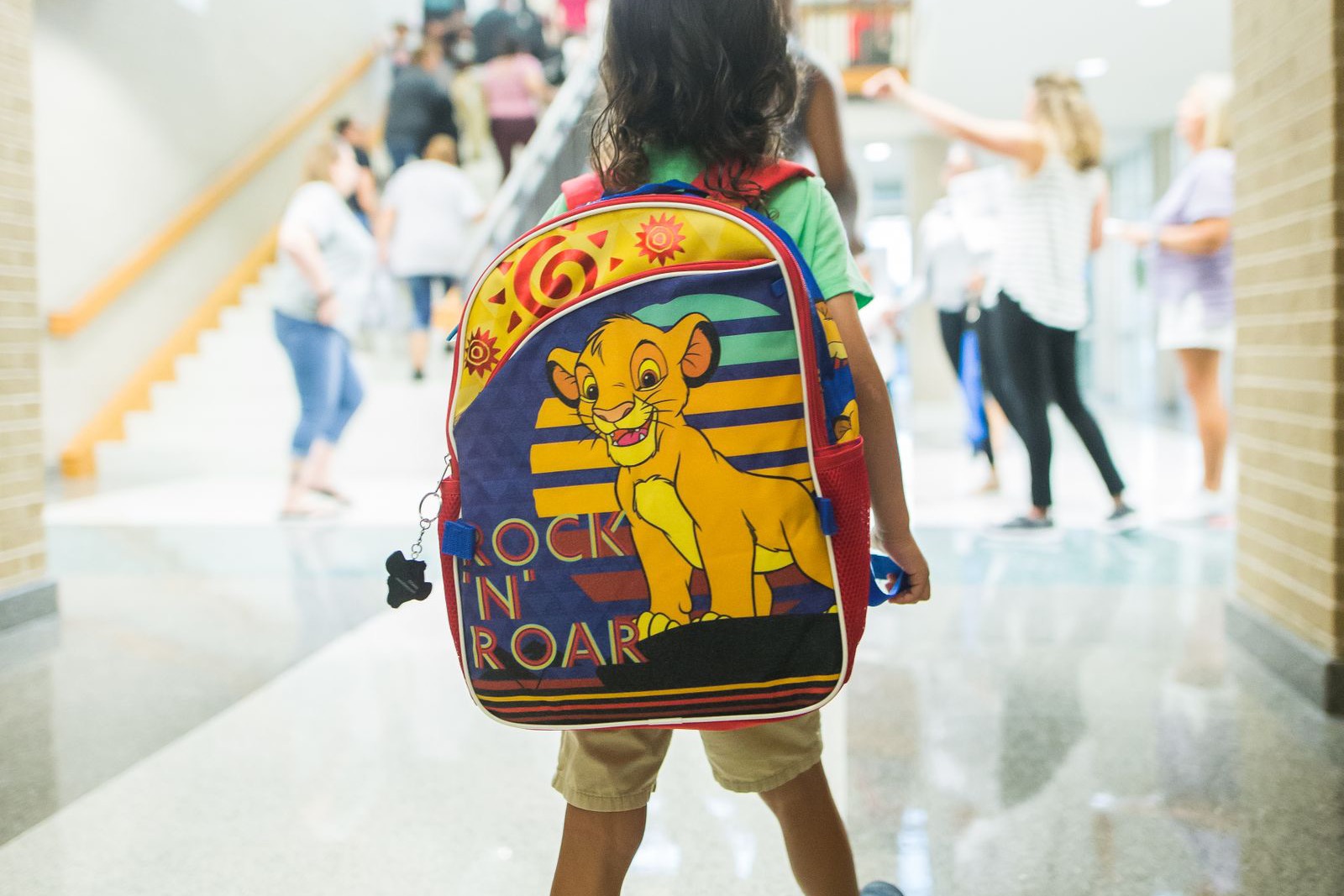
- Practicing the “school routine” at home. Have your child wear their uniform or kindergarten clothes at home for 15–20 minutes. Practice taking things out of the backpack, sitting at a desk while drawing and tidying up toys with a timer.
- Short visits. Arrange with the staff to visit the empty classroom for 10 minutes, then for 15 minutes during quiet time when there is no noise.
Common mistakes during adaptation
Trying to do what’s best, parents or teachers sometimes make mistakes that can set a child’s progress back by months.
- The “throw them in the water to learn to swim” strategy. Some believe the child just needs to be left in the group and will “get used to it”. For a child with ASD, this is a direct path to deep distress, more stimming (self-stimulatory behavior) and skill regression.
- No communication with teachers. Hiding the diagnosis or the child’s needs (for example, that they are afraid of certain sounds or are a very selective eater) leaves the teacher without the tools to help.
- Expecting quick interaction with peers. Parents get upset if their child plays alone. But parallel play (playing next to others but not with them) is already a huge step forward! Don’t push your child to become the life of the party right away.
- Ignoring sensory needs. Refusing to use noise-cancelling headphones or sensory toys in class will only increase anxiety.
When is a specialist essential?
Sometimes preparing on your own isn’t enough. You really need the help of an ABA specialist or a tutor (a child’s classroom assistant) if:
- Your child shows aggression toward other children or self-injury (hitting or biting themselves) in response to demands.
- There are severe meltdowns that can’t be stopped or predicted.
- Your child doesn’t respond to adults’ instructions in a group at all, even though they follow them at home.
- Your child can’t ask for basic needs (the toilet, a drink, a break) in a socially acceptable way.
- Adaptation has been going on for several months but stress levels aren’t going down.
An ABA specialist will help analyze the causes of unwanted behavior and develop an individual intervention plan.
What next: from theory to results
In this article we have only covered the tip of the iceberg. Knowing the basic principles and safe steps matters, but in practice parents face hundreds of small questions every day.
What if the child flatly refuses to enter the classroom? How do you teach them to ask another child for a toy instead of grabbing it? How exactly do you make a visual schedule that works? How do you prepare a tutor or explain the details of interaction to a teacher?
All of this needs not just advice but a clear, tested system.
That is exactly the system I offer in my course. It is designed so you don’t act blindly. Instead of dry theory, we get specific.
In the course you get:
- A complete step-by-step adaptation system: from the first day of getting to know the building to staying in the group independently.
- An exact sequence of actions: what parents do, what the tutor does and what the teacher does.
- Practical tasks to practice each skill before going out into the group.
- Ready-made templates, tables and checklists: visual schedules, notes for teachers and behavior data sheets.
- Analysis of specific situations (for example, what to do if your child screams in class or refuses to eat in the cafeteria).
- Structured materials for independent study. A one-to-one consultation with me is included only in the Platinum plan.
Socialization for a child with autism is a marathon, not a sprint. But with a clear plan, ready-made tools and professional guidance, you can make this journey comfortable, safe and as effective as possible for your child.