For many parents facing an autism spectrum disorder (ASD) diagnosis or a speech delay for the first time, the term “ABA therapy” sounds complicated and even a little frightening. There is a lot of conflicting information online, which creates false ideas about how the learning process actually works.
In this article we look at what really happens behind the therapist’s door, which basic principles underpin the method and which mistakes parents who are just starting to explore applied behavior analysis should avoid.
The problem: why do parents fear ABA therapy?
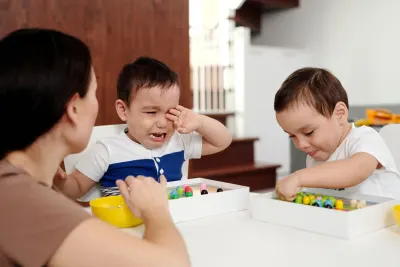
The most common problem we see in practice is fear of the unknown. Parents imagine an ABA session as strict “training” where a child sits at a table for hours while a stern specialist makes them do boring tasks. This is a huge myth that keeps children from getting the help they need in time.
In reality, modern ABA therapy (Applied Behavior Analysis) is built on play, motivation and an individual approach. The problem is that when parents try to apply fragments of knowledge from free videos online, they often skip the most important stage - building rapport. The child starts resisting, unwanted behavior appears, and the parents conclude: “This method isn’t for us.” To avoid this, it is important to understand the fundamental principles every session is built on.
Basic principles of a successful ABA session
ABA therapy is not a set of random games but the science of behavior. Every session rests on a few key principles that allow a child to learn easily and happily:
- Building rapport (pairing): This is the very first and most important stage. The specialist doesn’t start the session with demands. First they become the child’s “best friend”, associated with favorite toys, treats and fun. Without trust and motivation, learning is impossible.
- Positive reinforcement: Everything the child does correctly is always rewarded. It can be a piece of a favorite cookie, soap bubbles, tickles or simply sincere praise. Reinforcement increases the likelihood that the child will want to repeat the correct action in future.
- Errorless learning: In the early stages the specialist prompts the child before they have a chance to make a mistake. This prevents frustration and gives the child a sense of success.
- Generalization: A skill is only considered learned when the child can show it not just in the office with the therapist but also at home with mom, at the playground or in a shop.
A few safe examples from practice
To see how these principles look in real life, let’s consider some basic situations.
- Example 1: Teaching requests (mands). A child loves soap bubbles but can’t ask for them. The specialist takes the bubble bottle and blows a few times to spark interest. Then they close the bottle and wait. When the child reaches for it, the specialist gives a prompt (for example, says the first syllable “bu” or helps the child hand over a PECS card). As soon as the child repeats the action or sound, they immediately get the bubbles.
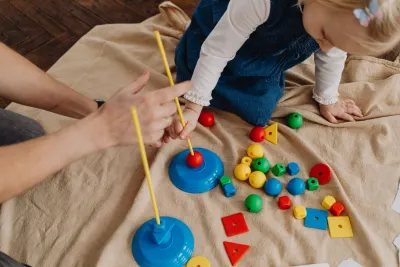
- Example 2: Sorting objects. There are two boxes on the table - red and blue. The child needs to put blocks of the matching color into them. The specialist hands the child a red block and gently guides their hand to the red box. When the block drops into the right box, the child is rewarded. Over time the physical prompt is removed.
These examples seem simple, but they require a clear understanding of how a particular child’s motivation works at a particular moment.
Common mistakes when trying on your own
Parents who have read a few articles often try running sessions at home and run into difficulties. Here are the most common mistakes:
- Starting with demands instead of motivation. If the child isn’t interested, any demand (“say”, “show”, “do”) will be felt as pressure and cause protest.
- Repeating the instruction over and over. Parents often say: “Give me the ball. Give me the ball. I said, give me the ball!” In ABA an instruction is given once; if the child doesn’t respond, a prompt is given rather than repeating the demand.
- Bribing instead of reinforcing. A bribe is telling a child who is already crying: “Calm down and I’ll give you a candy.” Reinforcement is when the child gets the candy right after calmly completing a task.
- Inconsistency. If today the child doesn’t get the tablet for a tantrum, but tomorrow mom is tired and gives in, the unwanted behavior will only become stronger.
When do you need a specialist and in-depth training?
Articles, videos and free materials are great for understanding the philosophy of the method, learning to see the reasons for your child’s behavior and avoiding major mistakes. But general advice cannot replace a full intervention program.
A specialist or in-depth training is needed when:
- Your child shows dangerous or aggressive behavior (self-injury, tantrums that put health at risk).
- Basic rewards don’t work and it seems that “nothing motivates” your child.
- You don’t know in what order to introduce new skills (what comes first: colors, imitation or pointing?).
- You need a clear structure rather than chaotic attempts to teach everything at once.
How do you turn knowledge into results?
At alinavradiy.com we understand that theory from the internet isn’t enough to build an effective learning process at home. In articles we can share only the tip of the iceberg - a basic understanding of how things work.
But real progress requires a system. That is why we created our comprehensive course. It includes the most valuable things:
- A complete step-by-step system: from the first moment of contact with your child to building complex academic and social skills.
- A clear sequence of actions: you will know exactly what to do if your child makes a mistake, loses motivation or starts crying.
- Ready-made templates, data sheets and checklists so you can track progress instead of acting blindly.
- Detailed analysis of specific situations and practical tasks to reinforce the material.
- A structured programme for independent study. A one-to-one consultation with Alina is included only in the Platinum plan.
ABA therapy is a powerful tool that changes families’ lives for the better. The key is learning to use it correctly, systematically and with professional guidance. Take a look at the course program on our website to get ready-made tools for your child’s development!