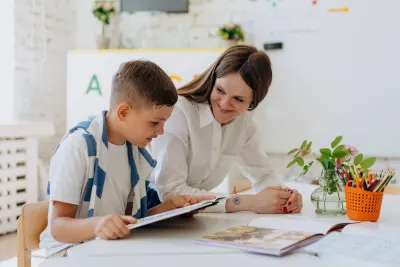
When a child doesn’t respond to their name, it means there is no basic orienting response to an auditory stimulus (their own name). This most often points to a hearing problem, a joint attention deficit or an autism spectrum disorder (ASD). Parents shouldn’t panic, but they shouldn’t ignore this signal either, because timely assessment and support at an early age give the best results for a child’s development.
Why a child doesn’t respond to their name
Auditory attention and responding when addressed are the foundation of communication. Typically, a baby starts recognizing their name and turning their head toward the sound at around 9–12 months. If at 18 months to two years a child consistently ignores their parents when called, there may be several underlying reasons.
Child development experts identify three main groups of causes:
- Physical hearing problems: partial or complete hearing loss, chronic ear infections.
- Behavioral and communication difficulties: a joint attention deficit, autism spectrum disorders.
- Environmental factors: excessive screen time and information overload, when the child’s brain adapts by “filtering out” surrounding sounds.
According to child psychologists, ignoring their name in early childhood is very rarely just a “whim” or disobedience. It is always a sign that the channel for taking in information is blocked or works differently.
Basic principles for parents
When you notice your child isn’t responding, don’t try to shout over the TV or get angry. Building good communication starts with changing your own habits.
- Reduce background noise: Turn off phones, the TV and background music in the room where you are talking with your child.
- Establish eye contact: Before saying their name, crouch down to your child’s eye level and gently draw their visual attention.
- Give their name positive meaning: Your child’s name shouldn’t be associated only with reprimands or “no”. Say it when you are giving them something nice or playing together.
Safe examples and first steps
To check your child’s response gently at home without causing harm, use safe, playful methods.
| Method | What to do | Goal |
| A voice test in silence | Call your child in your normal tone in a completely quiet room from one meter away. | Rule out the influence of a loud environment. |
| A touch-and-look bridge | Come close, touch their shoulder, say their name and wait for them to look at your face. | Link the sound of their name with eye contact. |
| The “Answer me” game | Hold a favorite toy next to your face while calling your child by name. | Shift the child’s attention to the parent through positive reinforcement. |
Common parent mistakes
Trying to solve the problem on their own, parents often make typical mistakes that only increase the ignoring:
- Constantly shouting their name from another room: The child gets used to the idea that a loud voice has no personal value or meaning for them.
- Long persuasion and reproaches: Phrases like “Why aren’t you listening to me again, I told you!” are too complex for a young child to process.
- Ignoring the problem in the hope they’ll “grow out of it”: Losing time in early childhood makes later work on speech and behavior harder.
Systematic help: when you need a specialist
If, despite a better home environment and less screen time, a child aged 1.5–2 years still completely ignores their name, it’s a signal to see specialists right away. First visit an ENT doctor to check hearing, and a pediatric neurologist.
To understand the nature of the child’s behavior in depth and develop communication skills, there is ABA therapy, which has proven highly effective worldwide. A certified ABA therapist carries out a comprehensive assessment of the child’s skills, identifies why the response is missing and develops an individual program.
If you want a complete step-by-step system, practical tasks, ready-made templates, tables, checklists and real case studies, consider the dedicated ABA therapy course. A one-to-one consultation with Alina is included only in the Platinum plan.
Frequently asked questions
- At what age should a child consistently respond to their name?
Typically, children start clearly turning their head or responding to their name at 9–12 months. - Does ignoring their name mean autism?
No. A lack of response may be linked to reduced hearing, sensory overload or a speech delay, so a comprehensive assessment is needed. - What if my child responds only when I shout?
This shows they have got used to loud stimuli; reduce overall noise at home and switch to warm eye contact. - Who should see my child first if they ignore their name?
First see a pediatric ENT doctor to check hearing, and a pediatric neurologist. - Does ABA therapy help build a response to their name?
Yes. The methods a professional ABA therapist uses help build a stable auditory response and social attention through a reward system.